
 By
By 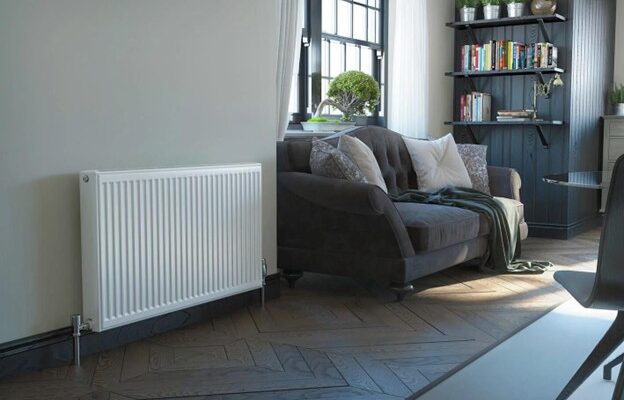
Finding the perfect balance between a cosy home and energy efficiency starts with choosing the right radiator size. Too small, and your space stays chilly; too large, and you waste energy and money. Many homeowners rely on guesswork, leading to uneven heating and rising bills. By accurately calculating your heat requirements, you can select the ideal radiator for every space—from living rooms to hallways—ensuring consistent warmth, lower costs, and comfort in every corner of your home.
Heating plays a crucial role in creating a comfortable home environment, yet many homeowners overlook one essential factor: radiator size. A correctly sized radiator distributes warmth efficiently, maintains steady temperatures, and helps manage energy use more effectively.
Choosing the right radiator isn’t simply about style or placement. It involves understanding room size, insulation, heat output, and the layout of the space. Even smaller areas like radiators for hallways require careful sizing to ensure consistent warmth without overheating or wasting energy.
With a few practical considerations, selecting the ideal radiator size becomes far easier.
How Radiator Size Affects Comfort and Efficiency
Before selecting a radiator, it helps to understand why size matters. Radiators work by releasing heat measured in BTUs (British Thermal Units), which indicate how much heat a radiator can produce in an hour.
A radiator that is too small will struggle to heat a room effectively, especially during colder months. Conversely, an oversized radiator may heat the space too quickly, leading to wasted energy and uneven temperature control.
Correct radiator sizing ensures:
- Consistent warmth across the room
- Improved energy efficiency
- Balanced heating throughout the home
- Reduced strain on the heating system
Choosing the right size means the radiator performs efficiently without unnecessary energy use.
Understanding Heat Output and BTU Ratings
What Is a BTU?
BTU stands for British Thermal Unit and measures how much heat a radiator can produce. The larger the room, the higher the BTU output required to heat it effectively.
BTU requirements depend on several factors including room dimensions, ceiling height, window size, and insulation levels. Rooms with poor insulation or large windows may need higher heat output.
Estimating Basic Heating Requirements
A common starting point is calculating the room’s cubic volume by multiplying its length, width, and height. This helps estimate the approximate heat output needed.
Additional factors can increase heating demand, such as:
- Large windows or glass doors
- Exterior-facing walls
- High ceilings
- Poor insulation
Understanding BTU output helps ensure the radiator chosen can comfortably heat the entire space.
Measuring the Room Correctly
Calculate Room Dimensions
Accurate measurements are essential for selecting the correct radiator size. Begin by measuring the room’s length, width, and ceiling height.
Multiply these measurements together to determine the total room volume. This value helps estimate the heating capacity required.
For example, larger rooms naturally require radiators with higher heat output to maintain comfortable temperatures.
Consider Ceiling Height and Layout
Rooms with higher ceilings contain more air that needs heating, which increases BTU requirements. Open layouts may also spread warmth across wider areas, meaning a larger radiator or multiple units may be needed.
Even transitional spaces like hallways benefit from proper sizing, especially when installing radiators for hallways, as these areas often connect several rooms and influence overall heat flow.
Accounting for Insulation and Windows
The Impact of Insulation
Insulation plays a major role in heat retention. Homes with good insulation retain warmth longer, allowing radiators to operate more efficiently.
Poor insulation, on the other hand, allows heat to escape quickly, requiring higher heat output to maintain comfortable temperatures.
Important insulation factors include:
- Wall insulation
- Loft or roof insulation
- Double or triple glazing
- Floor insulation
Better insulation often means a smaller radiator can heat the space effectively.
Window Size and Placement
Windows affect how much heat escapes from a room. Large or multiple windows may require additional heating capacity.
Radiators are commonly placed beneath windows to counter cold air entering the room. This placement allows warm air to circulate upward and distribute heat evenly.
Choosing the Right Radiator Type
Panel Radiators
Panel radiators are among the most common choices for home heating. They are available in various sizes and heat outputs, making them suitable for many room types.
Their flat design allows them to fit easily along walls without taking up excessive space.
Vertical Radiators
Vertical radiators are ideal for rooms with limited wall space. Their tall design provides efficient heat output while freeing up horizontal wall areas.
They are particularly useful in narrow areas or modern interiors where space optimisation is important.
Compact Radiators for Smaller Spaces
Smaller rooms or transitional spaces benefit from compact radiators designed to deliver efficient heat output without occupying large wall areas.
Compact designs are often used in areas like radiators for hallways, where space may be limited but consistent warmth remains essential.
Placement and Heat Distribution
Ideal Radiator Positioning
Placement significantly affects how effectively a radiator heats a room. Positioning a radiator along the coldest wall or beneath a window helps balance temperature differences and improve circulation.
Avoid placing large furniture directly in front of radiators, as this can block heat flow and reduce efficiency.
Multiple Radiators for Large Rooms
In larger rooms, a single radiator may not provide sufficient heat coverage. Installing multiple radiators helps distribute warmth evenly across the space.
This approach also reduces the need for a single high-output radiator, allowing more balanced temperature control.
Practical Tips for Choosing the Right Radiator Size
Selecting the correct radiator size becomes much easier when following a few simple guidelines.
- Measure rooms carefully to determine heating requirements.
- Calculate BTU output based on room size and layout.
- Consider insulation levels to understand heat retention.
- Factor in window size and placement when estimating heat loss.
- Choose radiator styles that suit the room’s layout while delivering adequate heat output.
These practical steps help ensure each radiator works efficiently and maintains a comfortable temperature.
Summary
Choosing the correct radiator size is essential for maintaining a warm, energy-efficient home. By considering room measurements, heat output requirements, insulation, and radiator placement, homeowners can achieve balanced and effective heating throughout the property.
Even smaller spaces deserve careful planning. Properly sized radiators for hallways help maintain consistent warmth between rooms, contributing to a more comfortable and efficient heating system across the entire home.






Comments